Turnpike Troubadours
FollowTahlequah, OK
About
Times are tough for just about everyone these days, especially for those who live in what is often referred to as the “flyover states,” in the heart of the country. People have become tougher, their skins have grown thicker and they have become much harder to win over. That especially holds true when it comes to the music that rolls into the bars, music halls and honky tonks of their towns. The overwhelming success that Turnp
TURNPIKE TROUBADOURS
A Long Way from Your Heart
Roughly 3,300 people live in Okemah, Oklahoma, a town with
vintage redbrick storefronts, a dive bar called the Rocky Road
Tavern, a name that means “things up high” in Kickapoo, and a
strange track record of birthing great American songwriters:
Woody Guthrie is from Okemah. Grammy-nominee John Fullbright
is, too. Evan Felker belongs on that list.
“I was born in Okemah but was raised in Wright City, a town in
southeastern Oklahoma,” Felker says. “Now I live in Okemah
again. The characters I write about are living in that world I
grew up in––a bucolic, dirt-underneath-your-fingernails sort of
world. People where I grew up are tough. It’s nice to be able
to represent them in art.”
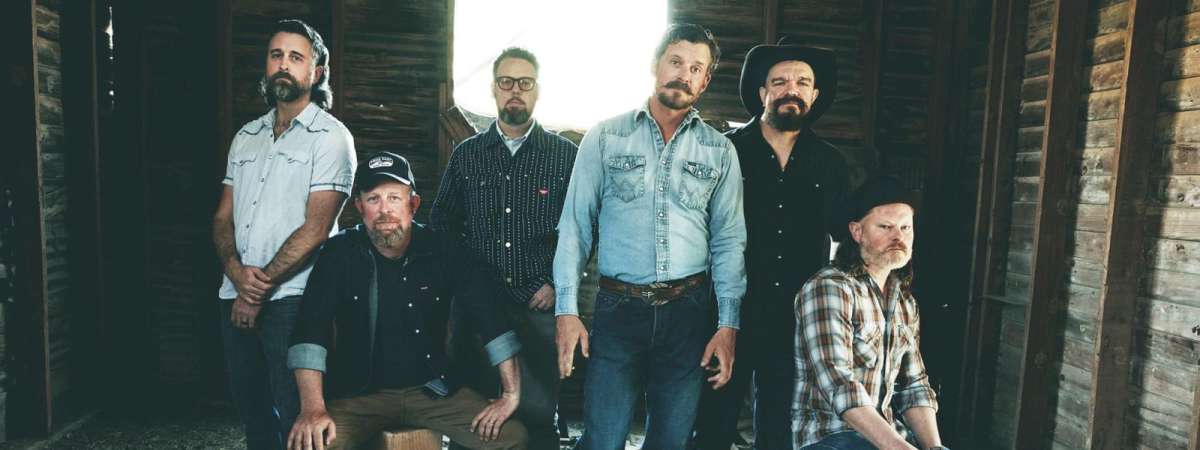
Felker is the frontman, cofounder, and primary songwriter for
Turnpike Troubadours, a virtuosic band of country-rock road
dogs who, on any given night of the week, will play for a much
bigger crowd than the populations of Okemah and Wright City
combined. Singer/guitarist Felker, fiddler Kyle Nix, steel and
electric guitarist Ryan Engleman, bassist RC Edwards, drummer
Gabe Pearson, and steel and accordion player Hank Early deliver
punch after punch of smart rock-and-roll that sells out huge
venues throughout the Midwest and South and packs legendary
haunts like the Troubadour in Los Angeles.
With their highly anticipated fourth album A Long Way from Your
Heart, the sextet is poised for even bigger breakthroughs.
Narratives put to music are nothing new, but Felker and his
bandmates have upped the ante, creating a web of unforgettable
characters that show up on album after album in songs that are
both catchy and musically complex: men and women with their
backs against their wall, represented realistically but also
imbued with dignity. “It feels like going home to see that
those characters are still alive in a way that movies and
literary writers have always done,” Felker says of the
recurring favorites. “It feels good. There they are, all based
on people that I know and love. They’re composite characters
based on real people.”
A Long Way from Your Heart was produced by Grammy winner Ryan
Hewitt (The Avett Brothers, Flogging Molly, Red Hot Chili
Peppers). The result is a rare triumph––an album that hooks
immediately but then rewards listeners willing to dig deeper.
“I love what we as a band have turned into and how we treat
songs,” Felker says. “That’s something we’ve grown into––adding
some sort of oddly theatrical element to the musicianship to
help the story along, to sum up where or who the character is
to give him a little bit of landscape. It’s not just an
acoustic guitar and a guy telling you what somebody’s doing.”
The band’s impressive musicianship is multifaceted: fun with
time signatures via lapses into double or half time; clean,
abrupt stops; stealthy fingerpicking; unassailable grooves.
Felker’s warm vocals invite both closer listening and
dancing––a tricky mix that he exudes naturally. Unconventional
mash-ups work for Felker, who shrugs off attempts to label what
he does. “I find art in a lot of places,” he says. “I find
things that aren’t considered art in a lot of people’s views of
the world artful.”
A Long Way from Your Heart kicks off with a fine example of art
in the unexpected. Based on the experience of folks Felker knew
back home, “The Housefire” captures the devastation and hope
that follows losing just about everything. Cushioned by
Irish-inspired strings, the narrator’s gentleness as he loses
all he’s built stands tallest. Rolling singalong “Something to
Hold On To” begs for one last chance, while the sweetly sad
“Old Time Feeling (Like Before)”––which Felker co-wrote with
Edwards and friend Jonny Burke––fights falling back into old
patterns over a lush chorus of strings led by winsome dobro.
Album standout “Pay No Rent” is an ode to Felker’s aunt Lou,
who lived and owned a beloved local bar in Okemah, the Rocky
Road Tavern. “She was about the only person I could go drinking
with at 10 a.m. on a Tuesday,” Felker says, then laughs. “We
got to be really good friends. We’d hang out a lot, fish
together, cook together, drink tequila, and build a big-ass
fire at her place out on Buckeye Creek. She loved that song
‘Blue Eyes Crying in the Rain.’ She said, ‘If I ever die––I
hope I never do, but if I do––you gotta play ‘Blue Eyes Crying
in the Rain’ at my funeral.’” Lou passed away last year, and
when Felker got the news, he called good friend John
Fullbright, and the two got to work learning the song. Then,
the day before the funeral, the two realized Lou had asked
about five other people to sing “Blue Eyes,” too. “So between
noon and three in the morning, we wrote ‘Pay No Rent’ for her
instead and played that,” Felker explains, laughing again.
Based on an old Irish saying, the song is a gorgeous tribute.
Felker’s favorite album track, “Unrung” is a winning amble
through warnings, praise, and a tinge of jealousy, all written
about a good friend. “A Tornado Warning”––Felker’s other
favorite––is a love song brimming with detail. Frenetic story
song “The Winding Star Mountain Blues” traces the strained
friendship between a stand-up guy and his wayward childhood
friend to immortalize a different kind of heartbreak. Electric
shuffler “The Hard Way” is a wry send-up of trying to relive
youth when it’s a little too late.
Featuring nimble piano and Haggard-worthy jazz guitar licks,
album closer “Sunday Morning Paper” is a nugget of
hero-worshipping wit. Felker was inspired to write the song by
his uncle, Ervin Felker. “He gave me my first guitar. He played
in bands and was a Marine–– he’s the guy from ‘Blue Star,’”
Felker says, referencing a track from the band’s 2012 release
Goodbye Normal Street. Felker took the first line from one of
his uncle’s songs then penned the rest to create a celebration
of the giants of 70s country-rock––the elder Felker included.
The album’s sharply drawn characters and the range of
challenges they face creates a tapestry that’s compelling and
ultimately, inspiring. “This whole record is about resilience
in the face of tragedy––tragedies of different sizes,” Felker
says. “Just getting your nose down and dealing with it.”
For press information on Turnpike Troubadours, please contact
Jim Flammia [email protected] or Michelle Steele
[email protected] at All Eyes Media (615) 227-2770
ike Troubadours have had on the so-called Red Dirt circuit of those states says a lot about the quintet’s authenticity and fire, particularly because their music is not exactly what that scene in known for producing.
“When we first started playing, people couldn’t have cared less that we were there,” recalls Troubadours’ frontman Evan Felker. “They were there to drink beer and raise hell and they didn’t really care what music was playing while they did it. But as we went on and as we got better, they started to listen. I mean, they were still drinkin’ plenty of beer, but before too long, they were actually coming to hear us and asking us to play our songs, and not just covers of traditional favorites and all the other stuff we’d been doing.”
Not only did the crowds get more attentive, they kept getting bigger. As time went on, and the Troubadours broadened their touring circle, they moved on from tiny clubs in the more obscure corners of the Sooner state and started hitting – and selling out – prestigious venues like Cain’s Ballroom in Tulsa, the Firehouse Saloon in Houston and Antone’s in Austin.
Over the course of the past five years, Felker, bassist RC Edwards, fiddle player Kyle Nix, guitarist Ryan Engleman and drummer Gabe Pearson, have honed the rowdy, quick-witted sound that’s brought folks of all stripes together in front of those stages. And on Goodbye Normal Street, the Troubadours’ third full-length album, the band takes that blend of nice and easy and nice and rough and distills it into a 43-minute ride that takes in the scenery of America’s Heartland and the inner workings of a group of 20-somethings on a quest for something better.
“This time around, we tried to balance things out,” says bassist Edwards, who shelved a steady gig as a pharmacist in late 2011 to concentrate on the band. “We wanted to combine the idea of getting something perfect, the way you can only do in a proper studio, with the energy of playing in front of a thousand people jumping around and screaming.”
They attack that goal with gusto on Goodbye Normal Street, putting the pedal to the metal on “Before the Devil Knows We’re Dead” (a breakneck romp about regular folks who lived hard and died in a blaze of glory) and dialing back to a sensual closing-time waltz on “Call a Spade a Spade” (a cheater’s lament on which Felker duets with Jamie Wilson of the Trishas).
Felker, who writes the majority of the lyrics – with an assist from Edwards, who penned the semi-autobiographical “Morgan Street,” about the band’s hardscrabble early days – has a knack for capturing slices of life in vivid detail. He can hit hard emotionally with a song like “Blue Star” (a bittersweet tale of a veteran returning from war) or tweak the listener with something like “Gin, Smoke and Lies” (on which he contrasts his own romantic plight with that of a rooster who manages to satisfy 20 partners, and not just one).
“All the songs are about people we know,” he says. “And yeah, some of them are probably about me to some degree – the guy who ticks off the wrong girl from Arkansas, and the guy who doesn’t always like what he sees himself becoming. Mostly though, I think they’re just honest.”
The band – which took its name from the Indian Nation Turnpike that connected so many of the smaller towns where they cut their teeth – gradually evolved from offering acoustic explorations of tunes by Townes Van Zandt and Jerry Jeff Walker to kicking out three or four sets a night of full-throttle roadhouse country – tinged with the punk rock attitude that was in the air during the members’ teen years.
“We all pretty much grew up with hardcore country music around us,” says Felker. “I mean, sure, there was rock stuff in there, but the real old-school stuff, plus exposure to folks like Jason Boland and Cross Canadian Ragweed, really affected what we were playing. We’re really a product of both our influences and our environment. It wasn’t something that we sat in a room and dreamed up in one day.”
That’s clear. The raw-boned energy of their 2007 debut, Bossier City, cut on a shoestring budget and aimed squarely at getting boots on the dance floor earned raves from many corners, including No Depression, which dubbed it “a testament to the small towns in which they were raised ... with stories of longing, humor, tragedy and general life in rural America.” The quintet broadened its horizons on its sophomore outing, Diamonds and Gasoline, which spawned the Americana favorite “Every Girl” and brought them to the attention of folks throughout the country, and overseas.
And with Goodbye Normal Street – the name a reference to another longtime band residence as well as a state of mind that they left behind long ago – they set their sights on conquering even more expansive territories. With songs like the blue-collar anthem “Southeastern Son” and the universally understandable breakup plaint “Wrecked,” they look pretty likely to conquer them.
“This music, at its best, can put into words what we have been thinking for our entire lives,” says Felker, “and even at its worst, it gets people drinking beer and makes people happy. Either of those is fine with me.”