Joseph Ranieri Quintet
Tickets

On sale smallslive.com
About
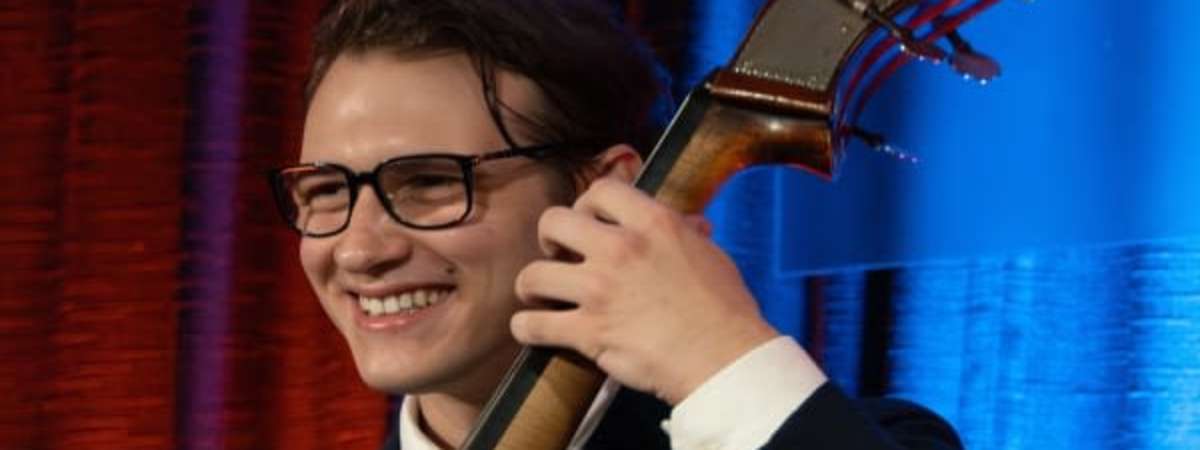
Hailing from Chicago, Illinois, Joey Ranieri’s natural affinity for the bass was apparent from the first time he held the instrument when he was 15. With a keen ear and focused taste, he sought out Chicago’s greatest jazz musicians and quickly began his mentorship under bassist Dennis Carroll, who’s guidance propelled him to the next level of musicality and harmonic sophistication. He attended the highly selective 2019 Vail Jazz Workshop, and has worked extensively in both Chicago and New York City. He has had the privilege of performing with such greats as George Coleman, Johnny O’Neal, Eric Alexander, Houston Person, Mike LeDonne, Emmet Cohen, Mary Stallings, Joe Farnsworth and countless others. His main musical ideology is that of taste, blues, and the aim for an individualized sound on his instrument.
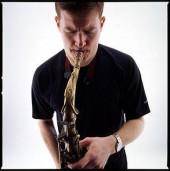
Boasting a warm, finely burnished tone and a robust melodic and harmonic imagination, tenor saxophonist Eric Alexander has been exploring new musical worlds from the outset. He started out on piano as a six-year-old, took up clarinet at nine, switched to alto sax when he was 12, and converted to tenor when jazz became his obsession during his one year at the University of Indiana, Bloomington (1986-87). At William Paterson College in New Jersey he advanced his studies under the tutelage of Harold Mabern, Joe Lovano, Rufus Reid, and others. "The people I listened to in college are still the cats that are influencing me today," says Alexander. "Monk, Dizzy, Sonny Stitt, Clifford Brown, Sonny Rollins, Jackie McLean, Joe Henderson--the legacy left by Bird and all the bebop pioneers, that language and that feel, that's the bread and butter of everything I do. George Coleman remains a big influence because of his very hip harmonic approach, and I'm still listening all the time to Coltrane because I feel that even in the wildest moments of his mid- to late-Sixties solos I can find these little kernels of melodic information and find ways to employ them in my own playing."During the 1990s, after placing second behind Joshua Redman in the 1991 Thelonious Monk International Saxophone Competition, Alexander threw himself into the whirlwind life of a professional jazz musician. He played with organ trios on the South Side of Chicago, made his recording debut in 1991 with Charles Earland on Muse Records, and cut his first album as leader in 1992 (Straight Up for Delmark). More recordings followed for numerous labels, including Milestone and others, leading to 1997's Man with a Horn; the 1998 collaborative quartet session with George Mraz, John Hicks, and Idris Muhammad, Solid!; and, that same year, the first recording by One For All, Alexander's ongoing band with Jim Rotondi, Steve Davis, Joe Farnsworth, Peter Washington, and Dave Hazeltine.Eric has appeared in many capacities on record, including leader, sideman, producer as well as composing a number of the tunes he records. By now, Alexander has lost count of how many albums feature his playing; he guesses 60 or 70. While he has garnered critical acclaim from every corner, what has mattered most has been to establish his own voice within the illustrious bop-based jazz tradition. In 2004, Eric signed an exclusive contract with the New York-based independent jazz label, HighNote Records where he has amassed a considerable discography of critically-acclaimed recordings. Most recent among them is Temple of Olympic Zeus (HCD 7172), The Battle with Vincent Herring and Mike LeDonne (HCD 7137) and It's all in the Game (HCD 7148) with Harold Mabern.Eric continues to tour the world over to capacity audiences. Using NYC as his home base he can regularly be seen in the NY clubs including ongoing appearances at Smoke.Weblinks:www.ericalexanderjazz.com
Syracuse, New York native Joe Magnarelli first played music at age 12, starting with guitar and trumpet lessons. He also picked out songs on the piano by ear.
Joe's early performance experience, from elementary through high school, came via playing the trumpet and guitar in church. Later, while attending Onondaga Community College in Syracuse, he was the pianist and choir director at the Central Baptist Church there.
In 1986, Joe received a bachelor's degree in liberal arts from the State University of New York in Fredonia, and that year, he moved to New York City to pursue a career in music.
Mags, as he's known, soon became a regular participant on the Manhattan-and-beyond jazz scene. From 1987, he toured and recorded with Lionel Hampton and Brother Jack McDuff.
In 1990, Joe was a semifinalist at the Thelonious Monk International Trumpet Competition in Washington, D.C. That decade also found him performing and recording with the Toshiko Akiyoshi Jazz Orchestra, Harry Connick, Jr., the Hard Bop Quintet, the Glenn Miller Orchestra, and Grant Stewart. He also performed with Jon Hendricks, the Carnegie Hall Jazz Orchestra, Ben Wolfe, and many others.
Joe made his debut as a leader with 1994's Why Not (Criss Cross). He's followed that excellent album with three others, all on Criss Cross: Always There (1997), Mr. Mags (2000), and Hoop Dreams (2005).
He also made two albums co-leading a sextet with the legendary
Philadelphia trumpeter John Swana: Philly-New York Junction (1998), and New York-Philly Junction (2003).
In 2003-2006, Mags performed with the great Latin jazz conguero Ray Barretto's New Sextet. Joe recorded on Ray's Time Was, Time Is (O+ Music), which was nominated for a Grammy.
Other artists and ensembles Joe has performed with include the Louis Hayes Quintet, the Marty Sheller Nonet, the Maria Schneider Jazz Orchestra, Dado Maroni, Rosemary Clooney, the Tom Harrell Big Band, Spike Wilner's Planet Jazz, Harry Whitaker, Junior Mance, John Pizzarelli, Mark Sherman, and Don Sebesky.
Joe is also a teacher. He is currently an adjunct professor of music at the New School for Social Research in New York, and New Jersey City University in Jersey City, New Jersey. He also conducts clinics and master classes around the world, sharing his musical experience and his knowledge from his past teachers. These teachers have included Jack Palmer, Sal Amico, Tommy Turrentine, James Moody, Garry Dial, Arnold Jacobs, and William Vachianno.
weblinks:
www.joemagnarelli.com
This artist does not have a bio yet.
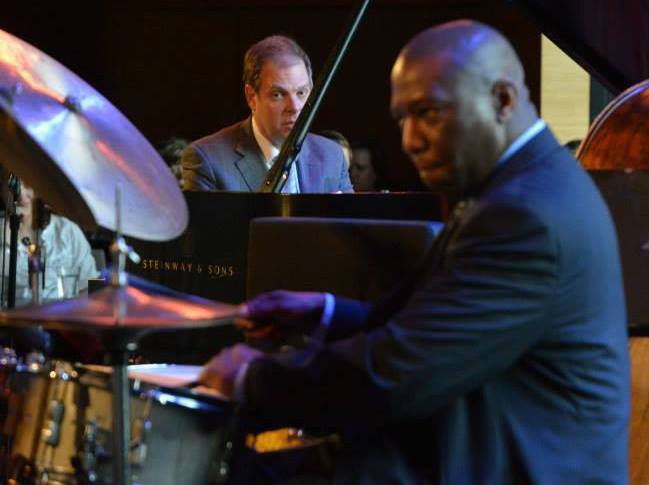
One of the many young hard-bop revivalists to have arrived on the scene in the late '70s and early 80s, Washington has been in particular demand by much older musicians, playing with such legendary veterans as Lee Konitz, Betty Carter, Johnny Griffin, Dizzy Gillespie, Clark Terry, and Tommy Flanagan. Born in Brooklyn, Washington studied with the former Dizzy Gillespie drummer Rudy Collins and attended New York's LaGuardia High School for Music & Art.Washington worked with Konitz while still in his teens, recording with the saxophonist's nonet in 1977. He worked with Carter from 1978-9 and Griffin from 1980. A prolific freelancer, Washington has compiled an enormous discography, performing on dozens of sessions by many of jazz's most prominent figures. Washington has a strong interest in jazz history; he's written liner notes for and/or helped prepare classic jazz re-releases by Art Blakey and Count Basie, among others.He's also taught jazz drumming at the New School in New York City, and worked as an announcer at the New Jersey jazz radio station WBGO
Boasting a warm, finely burnished tone and a robust melodic and harmonic imagination, tenor saxophonist Eric Alexander has been exploring new musical worlds from the outset. He started out on piano as a six-year-old, took up clarinet at nine, switched to alto sax when he was 12, and converted to tenor when jazz became his obsession during his one year at the University of Indiana, Bloomington (1986-87). At William Paterson College in New Jersey he advanced his studies under the tutelage of Harold Mabern, Joe Lovano, Rufus Reid, and others. "The people I listened to in college are still the cats that are influencing me today," says Alexander. "Monk, Dizzy, Sonny Stitt, Clifford Brown, Sonny Rollins, Jackie McLean, Joe Henderson--the legacy left by Bird and all the bebop pioneers, that language and that feel, that's the bread and butter of everything I do. George Coleman remains a big influence because of his very hip harmonic approach, and I'm still listening all the time to Coltrane because I feel that even in the wildest moments of his mid- to late-Sixties solos I can find these little kernels of melodic information and find ways to employ them in my own playing."During the 1990s, after placing second behind Joshua Redman in the 1991 Thelonious Monk International Saxophone Competition, Alexander threw himself into the whirlwind life of a professional jazz musician. He played with organ trios on the South Side of Chicago, made his recording debut in 1991 with Charles Earland on Muse Records, and cut his first album as leader in 1992 (Straight Up for Delmark). More recordings followed for numerous labels, including Milestone and others, leading to 1997's Man with a Horn; the 1998 collaborative quartet session with George Mraz, John Hicks, and Idris Muhammad, Solid!; and, that same year, the first recording by One For All, Alexander's ongoing band with Jim Rotondi, Steve Davis, Joe Farnsworth, Peter Washington, and Dave Hazeltine.Eric has appeared in many capacities on record, including leader, sideman, producer as well as composing a number of the tunes he records. By now, Alexander has lost count of how many albums feature his playing; he guesses 60 or 70. While he has garnered critical acclaim from every corner, what has mattered most has been to establish his own voice within the illustrious bop-based jazz tradition. In 2004, Eric signed an exclusive contract with the New York-based independent jazz label, HighNote Records where he has amassed a considerable discography of critically-acclaimed recordings. Most recent among them is Temple of Olympic Zeus (HCD 7172), The Battle with Vincent Herring and Mike LeDonne (HCD 7137) and It's all in the Game (HCD 7148) with Harold Mabern.Eric continues to tour the world over to capacity audiences. Using NYC as his home base he can regularly be seen in the NY clubs including ongoing appearances at Smoke.Weblinks:www.ericalexanderjazz.com
Syracuse, New York native Joe Magnarelli first played music at age 12, starting with guitar and trumpet lessons. He also picked out songs on the piano by ear.
Joe's early performance experience, from elementary through high school, came via playing the trumpet and guitar in church. Later, while attending Onondaga Community College in Syracuse, he was the pianist and choir director at the Central Baptist Church there.
In 1986, Joe received a bachelor's degree in liberal arts from the State University of New York in Fredonia, and that year, he moved to New York City to pursue a career in music.
Mags, as he's known, soon became a regular participant on the Manhattan-and-beyond jazz scene. From 1987, he toured and recorded with Lionel Hampton and Brother Jack McDuff.
In 1990, Joe was a semifinalist at the Thelonious Monk International Trumpet Competition in Washington, D.C. That decade also found him performing and recording with the Toshiko Akiyoshi Jazz Orchestra, Harry Connick, Jr., the Hard Bop Quintet, the Glenn Miller Orchestra, and Grant Stewart. He also performed with Jon Hendricks, the Carnegie Hall Jazz Orchestra, Ben Wolfe, and many others.
Joe made his debut as a leader with 1994's Why Not (Criss Cross). He's followed that excellent album with three others, all on Criss Cross: Always There (1997), Mr. Mags (2000), and Hoop Dreams (2005).
He also made two albums co-leading a sextet with the legendary
Philadelphia trumpeter John Swana: Philly-New York Junction (1998), and New York-Philly Junction (2003).
In 2003-2006, Mags performed with the great Latin jazz conguero Ray Barretto's New Sextet. Joe recorded on Ray's Time Was, Time Is (O+ Music), which was nominated for a Grammy.
Other artists and ensembles Joe has performed with include the Louis Hayes Quintet, the Marty Sheller Nonet, the Maria Schneider Jazz Orchestra, Dado Maroni, Rosemary Clooney, the Tom Harrell Big Band, Spike Wilner's Planet Jazz, Harry Whitaker, Junior Mance, John Pizzarelli, Mark Sherman, and Don Sebesky.
Joe is also a teacher. He is currently an adjunct professor of music at the New School for Social Research in New York, and New Jersey City University in Jersey City, New Jersey. He also conducts clinics and master classes around the world, sharing his musical experience and his knowledge from his past teachers. These teachers have included Jack Palmer, Sal Amico, Tommy Turrentine, James Moody, Garry Dial, Arnold Jacobs, and William Vachianno.
weblinks:
www.joemagnarelli.com
This artist does not have a bio yet.
One of the many young hard-bop revivalists to have arrived on the scene in the late '70s and early 80s, Washington has been in particular demand by much older musicians, playing with such legendary veterans as Lee Konitz, Betty Carter, Johnny Griffin, Dizzy Gillespie, Clark Terry, and Tommy Flanagan. Born in Brooklyn, Washington studied with the former Dizzy Gillespie drummer Rudy Collins and attended New York's LaGuardia High School for Music & Art.Washington worked with Konitz while still in his teens, recording with the saxophonist's nonet in 1977. He worked with Carter from 1978-9 and Griffin from 1980. A prolific freelancer, Washington has compiled an enormous discography, performing on dozens of sessions by many of jazz's most prominent figures. Washington has a strong interest in jazz history; he's written liner notes for and/or helped prepare classic jazz re-releases by Art Blakey and Count Basie, among others.He's also taught jazz drumming at the New School in New York City, and worked as an announcer at the New Jersey jazz radio station WBGO
Lineup