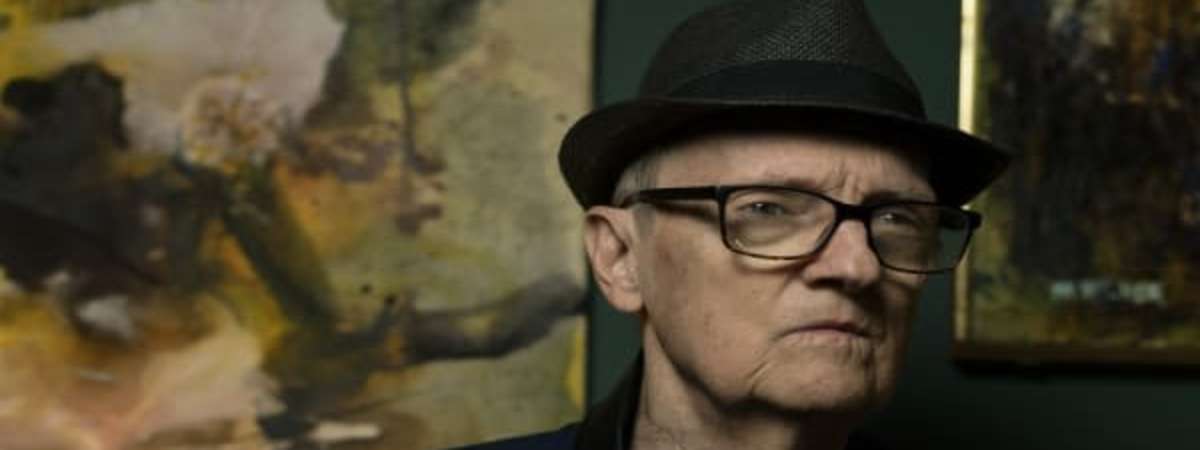
Tad Shull Quartet
Tickets

On sale smallslive.com
About
Tad Shull is a tenor saxophonist, composer and bandleader with a number of records on Criss-Cross Jazz. His style combines the lush tone quality of the classic tenor saxophonists with the risk-taking harmonic approach of hard bop and beyond.
After studying with David Liebman and Joseph Allard, Shull worked with the Widespread Depression Jazz Orchestra and the Smithsonian Jazz Repertory Ensemble. More recently he has fronted his own quartets. He has performed with Roy Eldridge, Dizzy Gillespie, Woody Herman, Eddie Higgins, Milt Hinton, Dave McKenna, Melvin Rhyne, and many others.
Recordings under Tad Shull's name on the Criss Cross label include "Deep Passion" and "In the Land of the Tenor." He has two discs with the Tenor Triangle, featuring Ralph Lalama, Eric Alexander, and Tad Shull with the Melvin Rhyne Trio: "Tell It Like It Is " and "Aztec Blues," for which Shull composed the title cut. He also teamed with tenor saxophonist Mark Turner for "Two Tenor Ballads" and appeared as a special guest on Mel Rhyne's "Tomorrow Yesterday Today."
Rob Schneiderman was born in Boston, Massachusetts, and raised in California. His Jazz career began in San Diego playing piano for visiting soloists such as Eddie Harris, Sonny Stitt, Harold Land and Charles McPherson. A move to New York in 1982 led to performing and touring experience with the likes of J.J. Johnson, Chet Baker, James Moody, Art Farmer and Clifford Jordan, including trips to Europe and Japan. A performance fellowship from the National Endowment for the Arts featured Rob with George Coleman, Jimmy Heath, Claudio Roditi, and Slide Hampton. The collaboration with Slide resulted in the CD New Outlook, the first of Rob's ten recordings as a leader for the Reservoir Music label. These CD's contain over twenty Schneiderman originals as well as arrangements of many standards. The most recent release is entitled Glass Enclosure, featuring master saxophonist Charles McPherson, with Todd Coolman on bass and Leroy Williams on drums. Among the sidemen featured on the other dates are Billy Higgins, Rufus Reid, Brian Lynch, Ralph Moore, Peter Washington, Lewis Nash, Akira Tana, Billy Hart, Gary Smulyan and Ben Riley. Rob's Reservoir CD Keepin' in the Groove received 4 ½ stars (out of five) from Down Beat magazine. Rob's recordings as a sideman include sessions with Eddie Harris, J.J. Johnson, and TanaReid.
As a Jazz educator, Rob has been in residence at the Stanford Jazz Workshop. He previously taught as an adjunct professor in the Jazz departments of both William Paterson University (with Rufus Reid) and Queens College NY (with Jimmy Heath) in addition to giving numerous clinics around the country and teaching many students privately. He has also been on the faculty of The Jazz School in Berkeley.
In May 2001 Rob received a Ph.D. in Mathematics under the guidance of Robion Kirby from the University of California at Berkeley. After stints at the Max-Planck-Institute for Mathematics in Bonn as a National Science Foundation Post Doctoral Fellow, NYU's Courant Institute, and UPenn, Rob is currently on the faculty of the Department of Mathematics and Computer Science at Lehman College, City University of New York. His area of interest is Low-dimensional Topology and his research focuses on 2-spheres in 4-dimensional manifolds and 3-dimensional knot theory.
Weblinks:
www.robschneiderman.com/
Bassist Paul Gill is veteran of the New York jazz scene and is recognized for his buoyant, swinging bass lines and virtuosic arco solos. When Gill arrived in New York in the mid 1990's he was described by Jazz Times magazine as "surely one of the brightest of the up-and-coming bassists”. He has appeared as a sideman on over 60 recordings.
Born in Baltimore, MD, Paul had established himself as a local mainstay in the Balto-DC area from 1984-1994 by both working with fellow hometown musician Gary Bartz, and backing artists that came to town such as Benny Golson, Rosemary Clooney, Stanley Turrentine, and Sonny Fortune.
Immediately upon moving to New York, Gill began working with legendary vocalist Jon Hendricks. In 1999 he left Hendricks to embark on a year long world tour with singer Diana Krall. Following Diana Krall in 2001 he joined the Toshiko Akiyoshi Jazz Orchestra. The second half of the 2000’s found Paul touring with either vocalist Elvis Costello or guitarist Pat Martino.
Gill has worked in every major jazz club in New York City and has performed or recorded with artists such as Hank Jones, Joe Henderson, Wynton Marsalis, Lou Donaldson, Bill Charlap, Jimmy Cobb, Al Foster, The Vanguard Orchestra, George Coleman, Eric Alexander, Lew Tabackin, Jim Snidero, Steve Wilson, Eddie Henderson, Kurt Elling, Kenny Rankin, and John Pizzarelli.
He is currently spending his time working in a trio setting with pianist Toshiko Akiyoshi as well as touring with vocalist Hilary Kole.
Weblinks:
[email protected]
Three exemplary recordings from the first decade of the 21st Century, all issued on Marc Edelman's Sharp Nine imprint, are closely tied to two important New York City venues. Alto saxophonist Ian Hendrickson-Smith's Up In Smoke (2003) and Still Smokin' (2004) were recorded live at Smoke Jazz Club (formerly Augie's), an uptown bastion of Hammond B-3 organ combos, jazz-funk bands, as well as an abundance of no-nonsense, straight-ahead sounds. In Orbit (2006), a studio date by Planet Jazz, the sextet founded by the late Johnny Ellis and currently led by pianist Spike Wilner, was nurtured by weekly appearances at Smalls, the legendary, musician-friendly Greenwich Village nightspot.
These recordings are living proof that jazz based on traditional practices continue to sound fresh and vital in an age when the music is stretching in a myriad of directions. The personnel include significant mainstream players who are held in particularly high esteem by their peers: Guitarist Peter Bernstein, trumpeters Joe Magnarelli and Ryan Kisor, tenor saxophonist Grant Stewart, pianists David Hazeltine and Wilner, as well as bassists Barak Mori, Peter Washington, and Neal Miner. Hendrickson-Smith's records contain the enthusiastic blowing that one expects from live recordings, minus the customary excess. In Orbit is mostly dedicated to Ellis's unique, melodically rich compositions which lend themselves to improvisations of short-to-moderate duration.
Aside from unapologetic ties to swing and bebop, the common denominator of all three discs is drummer Joe Strasser. Although you'll search in vain for his name in critic and listener polls, Strasser is a one of a kind stylist. Joe has his own take on jazz drumming, his own sound, says Hendrickson-Smith, who co-founded The Hotpants, a funk band which was a mainstay at Smoke for several years, with Strasser. And that's the true mark of any musician. Spike Wilner regards Strasser as an artist at a very high level; so creative and so thorough. Everything is very meticulous and everything is musical. He's tremendously versatile and traditional in the sense that he's got a real foundation. I know his idol is Jimmy Cobb, then Philly Joe Jones and the classic bebop drummers.
Not unlike any tradition-minded trapster, Strasser's sound starts with the ride cymbal. The second he hits the cymbal, you know who it is, Hendrickson-Smith says. It's really crisp and exact. The cymbal beat contains just enough weight, pushing the band forward without taking up too much space. It drives an easygoing, medium tempo version of I Wish You Love, from Still Smokin', and works well with repetitive tom-tom and rim knock combinations. Tightly cleaving to Barak Mori's walking line, the light yet distinct cymbal is the most prominent part of Strasser's playing behind Hendrickson-Smith's solo on The Best Things in Life Are Free (Up In Smoke). Later on during Hazeltine's turn, he varies the ride cymbal rhythm, shifting into choppier patterns for a couple of bars.
A colorist who is mindful of the effect of each stroke on the band as a whole, Strasser mines the rest of the components of the drum kit with equal parts of efficiency and artistry. The snare drum snaps with authority yet retains a certain lightness. Throughout Ryan Kisor's solo on an up tempo Love For Sale (Still Smokin'), his edgy snare accents push the trumpeter, and he sometimes plays in unison with Hazeltine's chords. The tom-toms are tuned beautifully and often employed on heads and behind soloists, frequently in repetitive patterns that sound out in a bell-like clarity. Improvising second-line funk rhythms on Hendrickson-Smith's Jacob's Crib (Still Smokin'), recurring three and four stroke figures to the mounted tom-tom make a fine contrast to single and buzz strokes to the snare. Strasser uses the bass drum more sparingly, and it impacts in interesting ways, like comping rhythms that would normally be executed on the snare or in acute contrast to brush strokes on ballads. He animates parts of Wilner and Stewart's solos on Buttermoose (In Orbit) with prominent bass drum hits, including one pattern that marches across the pulse. Memories of You (Still Smokin') includes stimulating bass drum beats amidst sensitive brush work behind Hendrickson-Smith's rendition of the melody and Hazeltine's solo.
Both Wilner and Hendrickson-Smith speak enthusiastically about Strasser's rock solid time and his empathetic ways of interacting with other musicians. I love playing fast tempos with Joe, Wilner says. He just burns, but he's never out of control. It's so easy to play with him. He's on everything. You give him a glance and he gives you exactly what you want. Me and Joe have these weird, comping experiences that happen quite a bit, Wilner continues, where I'll comp an idea and he'll comp something elaborate at the same time-those great jazz moments. And it happens a lot. One of those moments occurs during the latter part of Wilner's solo on Ellis's The Squirrel is a Girl (In Orbit) when Strasser intuits one of Wilner's lines and tailors accents to it.
That's a tough tempo to keep rock solid, Hendrickson-Smith says of the slow-to-medium pace of Chelsea Bridge, from Up In Smoke. At the suggestion of David Hazeltine, Strasser played with sticks instead of brushes. Sounding perfectly at ease, his steady, patient ride cymbal leads the way. He adds significant touches, like repetitive eighth note triplets to the mounted tom-tom during Hazeltine's solo, that never get in the way or violate the spirit of Billy Strayhorn's composition. He's a consummate sideman, Hendrickson-Smith adds. Joe's always waiting for you to ask him for something, and never forces the tune in a specific direction. He's got the perfect balance between gut and brains. If somebody gives Joe something to work with, he's all over it. Conversely, Strasser knows when to stay out of the way. For example, he all but disappears during the early stages of Magnarelli's Dual Highway (In Orbit) solo, allowing the trumpeter to explore a floating melodic line without the slightest interference.
Apart from incisive playing on the heads and effective comping strategies, Strasser is a first-rate soloist who stays in close touch with the materials at hand. The thing about Joe Strasser is that his solos are unbelievable; they're really quite unusual, Wilner enthuses. Mommy, Mommy NO! (In Orbit) begins with a brilliant eight bar break. A repeated five note figure executed in unison on the bass drum and cymbal is answered by terse fills. Though the break is grounded in time and indicates a specific tempo, it nonetheless contains a slightly unsettled feel. When the band enters you realize that it's based on the composition's melody. That's stuff Joe came up with, Wilner replies when asked if the break is part of Ellis's chart. It's part of the level of authority that a guy like Joe brings to the table.
A two bar vamp played by Wilner, Bernstein, and Gill provides a foundation for Strasser's extended solo on Hampton Hawes's Sonora (In Orbit). Thickset rhythms to the tom-toms, snare and cymbals are bound up in the simple figure. He approaches the vamp from every conceivable angle, cleaving to some parts and leaving others exposed. In contrast to the rest of the track's fleet swing, Strasser sounds as if he's having a grand time thrashing about in the muck of his own making.
Weblinks:
[email protected]
After studying with David Liebman and Joseph Allard, Shull worked with the Widespread Depression Jazz Orchestra and the Smithsonian Jazz Repertory Ensemble. More recently he has fronted his own quartets. He has performed with Roy Eldridge, Dizzy Gillespie, Woody Herman, Eddie Higgins, Milt Hinton, Dave McKenna, Melvin Rhyne, and many others.
Recordings under Tad Shull's name on the Criss Cross label include "Deep Passion" and "In the Land of the Tenor." He has two discs with the Tenor Triangle, featuring Ralph Lalama, Eric Alexander, and Tad Shull with the Melvin Rhyne Trio: "Tell It Like It Is " and "Aztec Blues," for which Shull composed the title cut. He also teamed with tenor saxophonist Mark Turner for "Two Tenor Ballads" and appeared as a special guest on Mel Rhyne's "Tomorrow Yesterday Today."
Rob Schneiderman was born in Boston, Massachusetts, and raised in California. His Jazz career began in San Diego playing piano for visiting soloists such as Eddie Harris, Sonny Stitt, Harold Land and Charles McPherson. A move to New York in 1982 led to performing and touring experience with the likes of J.J. Johnson, Chet Baker, James Moody, Art Farmer and Clifford Jordan, including trips to Europe and Japan. A performance fellowship from the National Endowment for the Arts featured Rob with George Coleman, Jimmy Heath, Claudio Roditi, and Slide Hampton. The collaboration with Slide resulted in the CD New Outlook, the first of Rob's ten recordings as a leader for the Reservoir Music label. These CD's contain over twenty Schneiderman originals as well as arrangements of many standards. The most recent release is entitled Glass Enclosure, featuring master saxophonist Charles McPherson, with Todd Coolman on bass and Leroy Williams on drums. Among the sidemen featured on the other dates are Billy Higgins, Rufus Reid, Brian Lynch, Ralph Moore, Peter Washington, Lewis Nash, Akira Tana, Billy Hart, Gary Smulyan and Ben Riley. Rob's Reservoir CD Keepin' in the Groove received 4 ½ stars (out of five) from Down Beat magazine. Rob's recordings as a sideman include sessions with Eddie Harris, J.J. Johnson, and TanaReid.
As a Jazz educator, Rob has been in residence at the Stanford Jazz Workshop. He previously taught as an adjunct professor in the Jazz departments of both William Paterson University (with Rufus Reid) and Queens College NY (with Jimmy Heath) in addition to giving numerous clinics around the country and teaching many students privately. He has also been on the faculty of The Jazz School in Berkeley.
In May 2001 Rob received a Ph.D. in Mathematics under the guidance of Robion Kirby from the University of California at Berkeley. After stints at the Max-Planck-Institute for Mathematics in Bonn as a National Science Foundation Post Doctoral Fellow, NYU's Courant Institute, and UPenn, Rob is currently on the faculty of the Department of Mathematics and Computer Science at Lehman College, City University of New York. His area of interest is Low-dimensional Topology and his research focuses on 2-spheres in 4-dimensional manifolds and 3-dimensional knot theory.
Weblinks:
www.robschneiderman.com/
Bassist Paul Gill is veteran of the New York jazz scene and is recognized for his buoyant, swinging bass lines and virtuosic arco solos. When Gill arrived in New York in the mid 1990's he was described by Jazz Times magazine as "surely one of the brightest of the up-and-coming bassists”. He has appeared as a sideman on over 60 recordings.
Born in Baltimore, MD, Paul had established himself as a local mainstay in the Balto-DC area from 1984-1994 by both working with fellow hometown musician Gary Bartz, and backing artists that came to town such as Benny Golson, Rosemary Clooney, Stanley Turrentine, and Sonny Fortune.
Immediately upon moving to New York, Gill began working with legendary vocalist Jon Hendricks. In 1999 he left Hendricks to embark on a year long world tour with singer Diana Krall. Following Diana Krall in 2001 he joined the Toshiko Akiyoshi Jazz Orchestra. The second half of the 2000’s found Paul touring with either vocalist Elvis Costello or guitarist Pat Martino.
Gill has worked in every major jazz club in New York City and has performed or recorded with artists such as Hank Jones, Joe Henderson, Wynton Marsalis, Lou Donaldson, Bill Charlap, Jimmy Cobb, Al Foster, The Vanguard Orchestra, George Coleman, Eric Alexander, Lew Tabackin, Jim Snidero, Steve Wilson, Eddie Henderson, Kurt Elling, Kenny Rankin, and John Pizzarelli.
He is currently spending his time working in a trio setting with pianist Toshiko Akiyoshi as well as touring with vocalist Hilary Kole.
Weblinks:
[email protected]
Three exemplary recordings from the first decade of the 21st Century, all issued on Marc Edelman's Sharp Nine imprint, are closely tied to two important New York City venues. Alto saxophonist Ian Hendrickson-Smith's Up In Smoke (2003) and Still Smokin' (2004) were recorded live at Smoke Jazz Club (formerly Augie's), an uptown bastion of Hammond B-3 organ combos, jazz-funk bands, as well as an abundance of no-nonsense, straight-ahead sounds. In Orbit (2006), a studio date by Planet Jazz, the sextet founded by the late Johnny Ellis and currently led by pianist Spike Wilner, was nurtured by weekly appearances at Smalls, the legendary, musician-friendly Greenwich Village nightspot.
These recordings are living proof that jazz based on traditional practices continue to sound fresh and vital in an age when the music is stretching in a myriad of directions. The personnel include significant mainstream players who are held in particularly high esteem by their peers: Guitarist Peter Bernstein, trumpeters Joe Magnarelli and Ryan Kisor, tenor saxophonist Grant Stewart, pianists David Hazeltine and Wilner, as well as bassists Barak Mori, Peter Washington, and Neal Miner. Hendrickson-Smith's records contain the enthusiastic blowing that one expects from live recordings, minus the customary excess. In Orbit is mostly dedicated to Ellis's unique, melodically rich compositions which lend themselves to improvisations of short-to-moderate duration.
Aside from unapologetic ties to swing and bebop, the common denominator of all three discs is drummer Joe Strasser. Although you'll search in vain for his name in critic and listener polls, Strasser is a one of a kind stylist. Joe has his own take on jazz drumming, his own sound, says Hendrickson-Smith, who co-founded The Hotpants, a funk band which was a mainstay at Smoke for several years, with Strasser. And that's the true mark of any musician. Spike Wilner regards Strasser as an artist at a very high level; so creative and so thorough. Everything is very meticulous and everything is musical. He's tremendously versatile and traditional in the sense that he's got a real foundation. I know his idol is Jimmy Cobb, then Philly Joe Jones and the classic bebop drummers.
Not unlike any tradition-minded trapster, Strasser's sound starts with the ride cymbal. The second he hits the cymbal, you know who it is, Hendrickson-Smith says. It's really crisp and exact. The cymbal beat contains just enough weight, pushing the band forward without taking up too much space. It drives an easygoing, medium tempo version of I Wish You Love, from Still Smokin', and works well with repetitive tom-tom and rim knock combinations. Tightly cleaving to Barak Mori's walking line, the light yet distinct cymbal is the most prominent part of Strasser's playing behind Hendrickson-Smith's solo on The Best Things in Life Are Free (Up In Smoke). Later on during Hazeltine's turn, he varies the ride cymbal rhythm, shifting into choppier patterns for a couple of bars.
A colorist who is mindful of the effect of each stroke on the band as a whole, Strasser mines the rest of the components of the drum kit with equal parts of efficiency and artistry. The snare drum snaps with authority yet retains a certain lightness. Throughout Ryan Kisor's solo on an up tempo Love For Sale (Still Smokin'), his edgy snare accents push the trumpeter, and he sometimes plays in unison with Hazeltine's chords. The tom-toms are tuned beautifully and often employed on heads and behind soloists, frequently in repetitive patterns that sound out in a bell-like clarity. Improvising second-line funk rhythms on Hendrickson-Smith's Jacob's Crib (Still Smokin'), recurring three and four stroke figures to the mounted tom-tom make a fine contrast to single and buzz strokes to the snare. Strasser uses the bass drum more sparingly, and it impacts in interesting ways, like comping rhythms that would normally be executed on the snare or in acute contrast to brush strokes on ballads. He animates parts of Wilner and Stewart's solos on Buttermoose (In Orbit) with prominent bass drum hits, including one pattern that marches across the pulse. Memories of You (Still Smokin') includes stimulating bass drum beats amidst sensitive brush work behind Hendrickson-Smith's rendition of the melody and Hazeltine's solo.
Both Wilner and Hendrickson-Smith speak enthusiastically about Strasser's rock solid time and his empathetic ways of interacting with other musicians. I love playing fast tempos with Joe, Wilner says. He just burns, but he's never out of control. It's so easy to play with him. He's on everything. You give him a glance and he gives you exactly what you want. Me and Joe have these weird, comping experiences that happen quite a bit, Wilner continues, where I'll comp an idea and he'll comp something elaborate at the same time-those great jazz moments. And it happens a lot. One of those moments occurs during the latter part of Wilner's solo on Ellis's The Squirrel is a Girl (In Orbit) when Strasser intuits one of Wilner's lines and tailors accents to it.
That's a tough tempo to keep rock solid, Hendrickson-Smith says of the slow-to-medium pace of Chelsea Bridge, from Up In Smoke. At the suggestion of David Hazeltine, Strasser played with sticks instead of brushes. Sounding perfectly at ease, his steady, patient ride cymbal leads the way. He adds significant touches, like repetitive eighth note triplets to the mounted tom-tom during Hazeltine's solo, that never get in the way or violate the spirit of Billy Strayhorn's composition. He's a consummate sideman, Hendrickson-Smith adds. Joe's always waiting for you to ask him for something, and never forces the tune in a specific direction. He's got the perfect balance between gut and brains. If somebody gives Joe something to work with, he's all over it. Conversely, Strasser knows when to stay out of the way. For example, he all but disappears during the early stages of Magnarelli's Dual Highway (In Orbit) solo, allowing the trumpeter to explore a floating melodic line without the slightest interference.
Apart from incisive playing on the heads and effective comping strategies, Strasser is a first-rate soloist who stays in close touch with the materials at hand. The thing about Joe Strasser is that his solos are unbelievable; they're really quite unusual, Wilner enthuses. Mommy, Mommy NO! (In Orbit) begins with a brilliant eight bar break. A repeated five note figure executed in unison on the bass drum and cymbal is answered by terse fills. Though the break is grounded in time and indicates a specific tempo, it nonetheless contains a slightly unsettled feel. When the band enters you realize that it's based on the composition's melody. That's stuff Joe came up with, Wilner replies when asked if the break is part of Ellis's chart. It's part of the level of authority that a guy like Joe brings to the table.
A two bar vamp played by Wilner, Bernstein, and Gill provides a foundation for Strasser's extended solo on Hampton Hawes's Sonora (In Orbit). Thickset rhythms to the tom-toms, snare and cymbals are bound up in the simple figure. He approaches the vamp from every conceivable angle, cleaving to some parts and leaving others exposed. In contrast to the rest of the track's fleet swing, Strasser sounds as if he's having a grand time thrashing about in the muck of his own making.
Weblinks:
[email protected]
Lineup