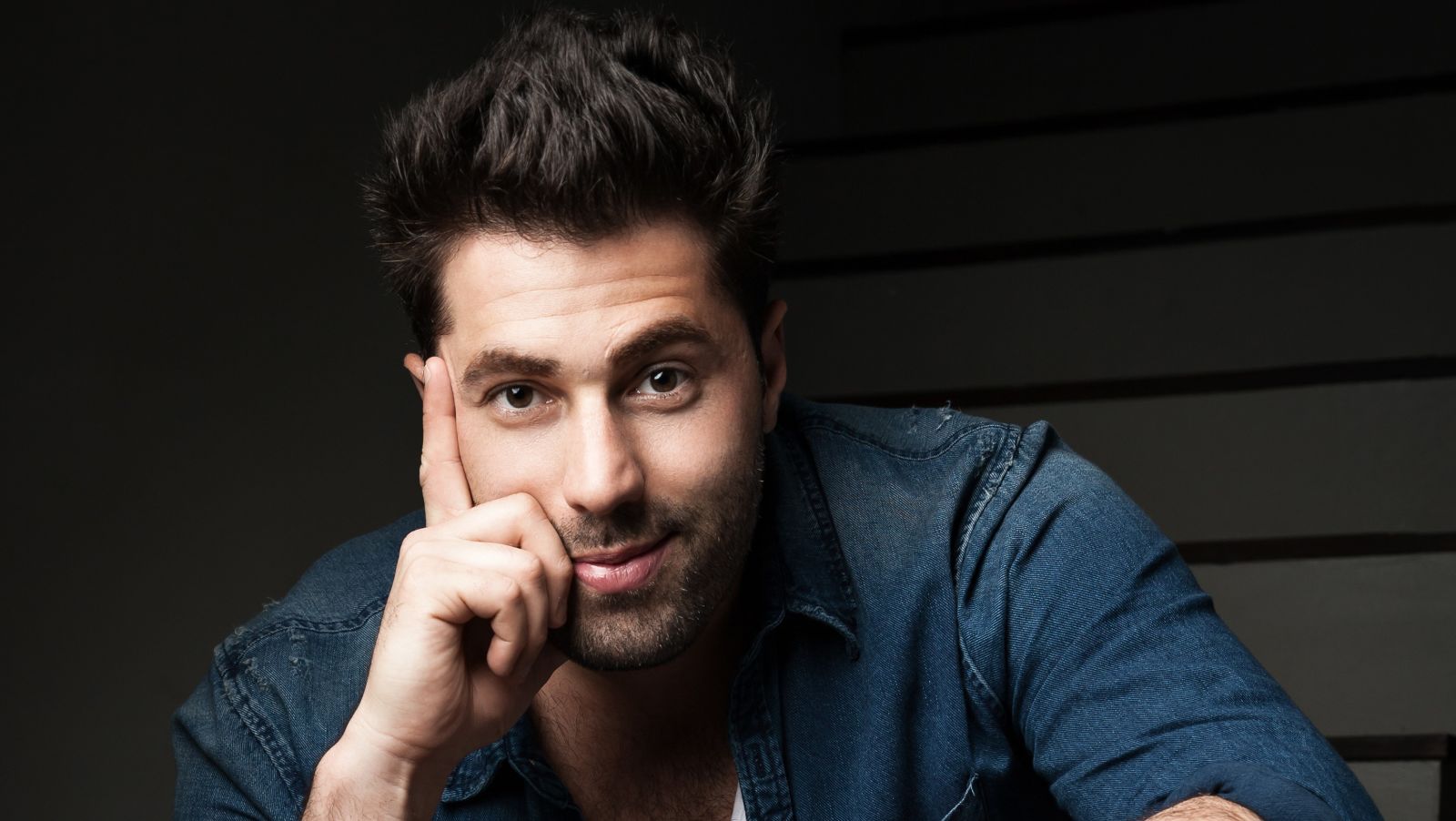
Jam Session Hosted By Adam Ray
Tickets

On sale smallslive.com
About
This artist does not have a bio yet.
Stacy's concept is original and inspiring. He is completely unpredictable and doesn't bore you with stock licks. In fact he doesn't bog himself down with just playing chord changes, and he plays ideas. He's a true improviser.
Eric Reed, pianist & composer
Stacy Dillard, raised in Muskegon Heights, Michigan, started playing the saxophone at a rather late age. In his hometown, there isn't much music happening, but only Robert Moore, Stacy's band instructor, and a host of close friends. Athletics was a big part of his life, leading to the late start on the instrument. Stacy attended college at Central State University in Wilberforce, Ohio to study with Dr. William Denza, Jim Smith, Chris Berg, and Lenard Moses. Very quickly, Dillard acquired the necessary knowledge that would soon put his name out on the local scene. It was a run-in with Wynton Marsalis in Dayton, Ohio that would turn his attention to the New York Scene. After graduation, Stacy took the act to Cincinnati, where he stayed for a short time and made his first recording appearance with Mike Wade on trumpet, drummer Melvin Broach and pianist William Menefield. Maturation was very rapid, finally leading the way to New York.
Stacy is a one-of-a-kind musician. Seriously."
Roy Hargrove
A young saxophonist of serious promise (Ben Ratliff, The New York Times), Stacy has caught the attention of many with his large and rich tone, developed ideas, accurate technique, work ethic, and patience, leading to a number of working opportunities. Dillard has played with Winard Harper, Cindy Blackmon, Lenny White, Norman Simmons, Frank Lacy, Wycliffe Gordon, Eric Reed, Roy Hargrove, Stephon Harris, Ernestine Anderson, Terrell Stafford, Herlin Riley, John Hicks, Frank Wess, Mulgrew Miller, Clark Terry, Victor Lewis, Steve Wilson, Johnny O'neal, Antonio Hart, Russell Malone, Lewis Nash, Mark Whitfield, the Mingus Big Band, and a host of others in different genres of music, including Shirley Ceasar, Alex Bugnon, Stephanie Mills, Pete Rock & C.L. Smooth, and more.
"Hey man, this (censored) can play. This MF can PLAY!
Wynton Marsalis
As well as being a sideman, Stacy Dillard is currently leading three bands of his own. cPhyve is the genesis project, along with cPhour, which is stylistically similar to cPhyve. The Other Side is exactly what the name says. The cast of members are the same as cPhyve, but r&b/funk/hip-hop oriented.
To sum it all up, Stacy Dillard is a perfect example of the fusing of tradition and innovation, the combination which keeps EVERYTHING fresh, exciting, energetic, theraputic, and more importantly, real.
Weblinks:
www.stacydillard.com
Chicago native Anthony Wonsey is one of the most innovative jazz pianists on the planet. His dynamic compositions and imaginative arrangements make him a much in demand player internationally. Anthony’s introduction to music began at a young age via the influence of his mother Darlene, a classically trained pianist, lessons from trumpeter Zilner Randolph, (musical director for Louis Armstrong’s band) and many moments in his family’s basement with his father Anthony, a Chicago postal worker/jazz fan who schooled his son, via a staticky AM radio, on the music he loved.
His progression flourished, resulting in a full scholarship to the prestigious Berklee College of Music in Boston. While a student, he played locally with Roy Hargrove and Antonio Hart; toured with Kenny Garrett and Nneena Freelon, followed by a staggering move when recruited by the legendary drummer Elvin Jones to join his group. Wonsey relocated from Boston to NYC and played with Jones’ Jazz Machine for five years. Mulgrew Miller and James Williams also became mentors.
“Anthony Wonsey’s touch on the piano is second to none.” Nicholas Payton, Grammy Award winner.
With his name now established as a hard bop/post-bop force, Wonsey commenced a multi-decade run as a pianist who toured and recorded with Wallace Roney, Nicholas Payton, and Chico Freeman.
“All Anthony has to do is look at a piano and it starts swinging. Soulfulness and musical virtuosity.” Ron Savage, Dean of Berklee College of Music, Professional Performance Division.
His first album as a leader was Anthonyolgy, followed by Blues for Hiroshi, and The Thang. He played solo concerts in Argentina and Italy. His unique sound generated sessions and live dates. Over the years he’s played with Jeremy Pelt, Charles Tolliver, Louis Hayes, Clark Terry, Russell Malone, Donald Harrison, Carmen Lundy, and Phil Woods.
“Anthony is the rare class of pianist that not only sounds great but feels great to play with. If that is old school, I don’t wanna be new!” Jeremy Pelt.
The pandemic hit musicians as hard as anyone. Clubs were closed, touring was restricted, playing with others was limited. Anthony Wonsey didn’t do recluse. He assembled a session for a recording date that resulted in his newest album: Lorraine’s Lullaby. Produced by Jeremy Pelt, the album, released in early November, is a meditative but swinging collection of inspired originals and deftly arranged standards.
“When I think of the phrase ''it takes a village to raise a child,'' I often think of my music training and all of the great musicians and people I have come across throughout the years. Music lessons were life lessons, I just did not realize it at the time. The village raising a child soon grew with this great Black American art form. Lorraine’s Lullaby is about saying thank you to all the people in the village who continue to raise that child. Since the pandemic, it has really humbled me in many ways - this is my way of saying thank you. I bring you Lorraine's Lullaby.”
Anthony Wonsey, 2021.
www.AnthonyWonsey.com
For generations, the Midwest has been a fertile ground for producing talented jazz bass players. St. Louis native Jimmy Blanton revolutionized the role of the bass during his years with the Ellington band in the 1930s. Oklahoman Oscar Pettiford co-led the first bebop group (with Dizzy Gillespie) to play on New York City's famed 52nd St. And Ron Carter, born in Michigan, redefined the role of the bass in small group jazz during his tenure with the great Miles Davis Quintet of the 1960s.
And while Bebop Generations bass player John Webber would modestly assert that he doesn't belong in the same league with legends such as Blanton, Pettiford and Carter, he is a prime example of the continuing stream of jazz musicians from the Midwest who have migrated to the jazz scene in New York -- and who help keep it going strong as the center for jazz activity in the world.
"I was actually born in St. Louis," states Webber during a conversation from his New York City apartment. "But when I was three, my parents moved to Wheaton, just outside of Chicago. That's pretty much where I grew up and first got into music."
By the time he was 10, Webber was taking lessons on bass -- but like most beginning students on the instrument, he started out on the electric bass rather than the large bulky upright. But that didn't mean he wasn't listening to jazz acoustic bass players. In fact, two legendary jazz bassists -- Ray Brown and Paul Chambers were his primary inspirations.
"The sound that ray Brown could get out of the bass was just amazing to me," recalls Webber. "And he was so solid in his technique. And Paul Chambers had that great walking bass style, and was so great playing with Miles and Coltrane."
By the age of 15, Webber had switched to playing the upright bass. After graduating from high school, he began serving his musical apprenticeship on the Chicago jazz scene -- working his way up to performing with top local musicians such as sax players Von Freeman and Lin Halliday and pianist Jodie Christian.
"That was where I really learned how to play jazz professionally," states Webber. "There were a lot of fine musicians playing in Chicago, and it was a competitive scene, because at that time there weren't a whole ton of places to play. So you definitely had to be good to play with the top musicians."
By 1986, Webber decided it was time to make the move to the competitive New York City jazz scene. He had built a solid reputation as one of the top bass players in Chicago, and had built up some solid contacts through jobs backing touring musicians coming through Chicago.
"It worked out pretty well for me," he recalls. "I moved to New York at the end of '86, and within a few months I was working with musicians like Jimmy Scott, Lou Donaldson, Bill Hardman and Junior Cook. And I was also playing regularly with groups led by Peter Bernstein and Christopher Hollyday."
It turned out that Webber's connections with trumpeter Hardman and sax player Cook would have the most lasting impact on his career -- and the formation of Bebop Generations. Hardman, who was out of the harp bop tradition and had worked with Charles Mingus, Jackie McLean, Art Blakey and Horace Silver, hosted freewheeling jam sessions at his house every week. Webber was a regular participant, and it was at one of those jams that he met drummer Joe Farnsworth and sax player Eric Alexander.
"When Joe got the leader's job at Augie's on weekends," recalls Webber, "he started asking me to play with his groups, and cecil Payne was a regular too. Eric had gone back to Chicago for awhile, but when he came back to New York, he started playing there. So that was really the roots of Bebop Generations."
Although Webber has established himself as a regular bass player with Johnny Griffin's group and records with Horace Silver and other musicians, playing with Bebop Generations -- and musicians such as Payne and Alexander -- has a special appeal.
"Cecil always comes up with some surprises whenever you play with him, plus he often plays things humorously," says Webber. "And Eric works you hard. He definitely plays with a lot of intensity. It's definitely a great band, and I want to keep working with these guys for as long as possible."
Stacy's concept is original and inspiring. He is completely unpredictable and doesn't bore you with stock licks. In fact he doesn't bog himself down with just playing chord changes, and he plays ideas. He's a true improviser.
Eric Reed, pianist & composer
Stacy Dillard, raised in Muskegon Heights, Michigan, started playing the saxophone at a rather late age. In his hometown, there isn't much music happening, but only Robert Moore, Stacy's band instructor, and a host of close friends. Athletics was a big part of his life, leading to the late start on the instrument. Stacy attended college at Central State University in Wilberforce, Ohio to study with Dr. William Denza, Jim Smith, Chris Berg, and Lenard Moses. Very quickly, Dillard acquired the necessary knowledge that would soon put his name out on the local scene. It was a run-in with Wynton Marsalis in Dayton, Ohio that would turn his attention to the New York Scene. After graduation, Stacy took the act to Cincinnati, where he stayed for a short time and made his first recording appearance with Mike Wade on trumpet, drummer Melvin Broach and pianist William Menefield. Maturation was very rapid, finally leading the way to New York.
Stacy is a one-of-a-kind musician. Seriously."
Roy Hargrove
A young saxophonist of serious promise (Ben Ratliff, The New York Times), Stacy has caught the attention of many with his large and rich tone, developed ideas, accurate technique, work ethic, and patience, leading to a number of working opportunities. Dillard has played with Winard Harper, Cindy Blackmon, Lenny White, Norman Simmons, Frank Lacy, Wycliffe Gordon, Eric Reed, Roy Hargrove, Stephon Harris, Ernestine Anderson, Terrell Stafford, Herlin Riley, John Hicks, Frank Wess, Mulgrew Miller, Clark Terry, Victor Lewis, Steve Wilson, Johnny O'neal, Antonio Hart, Russell Malone, Lewis Nash, Mark Whitfield, the Mingus Big Band, and a host of others in different genres of music, including Shirley Ceasar, Alex Bugnon, Stephanie Mills, Pete Rock & C.L. Smooth, and more.
"Hey man, this (censored) can play. This MF can PLAY!
Wynton Marsalis
As well as being a sideman, Stacy Dillard is currently leading three bands of his own. cPhyve is the genesis project, along with cPhour, which is stylistically similar to cPhyve. The Other Side is exactly what the name says. The cast of members are the same as cPhyve, but r&b/funk/hip-hop oriented.
To sum it all up, Stacy Dillard is a perfect example of the fusing of tradition and innovation, the combination which keeps EVERYTHING fresh, exciting, energetic, theraputic, and more importantly, real.
Weblinks:
www.stacydillard.com
Chicago native Anthony Wonsey is one of the most innovative jazz pianists on the planet. His dynamic compositions and imaginative arrangements make him a much in demand player internationally. Anthony’s introduction to music began at a young age via the influence of his mother Darlene, a classically trained pianist, lessons from trumpeter Zilner Randolph, (musical director for Louis Armstrong’s band) and many moments in his family’s basement with his father Anthony, a Chicago postal worker/jazz fan who schooled his son, via a staticky AM radio, on the music he loved.
His progression flourished, resulting in a full scholarship to the prestigious Berklee College of Music in Boston. While a student, he played locally with Roy Hargrove and Antonio Hart; toured with Kenny Garrett and Nneena Freelon, followed by a staggering move when recruited by the legendary drummer Elvin Jones to join his group. Wonsey relocated from Boston to NYC and played with Jones’ Jazz Machine for five years. Mulgrew Miller and James Williams also became mentors.
“Anthony Wonsey’s touch on the piano is second to none.” Nicholas Payton, Grammy Award winner.
With his name now established as a hard bop/post-bop force, Wonsey commenced a multi-decade run as a pianist who toured and recorded with Wallace Roney, Nicholas Payton, and Chico Freeman.
“All Anthony has to do is look at a piano and it starts swinging. Soulfulness and musical virtuosity.” Ron Savage, Dean of Berklee College of Music, Professional Performance Division.
His first album as a leader was Anthonyolgy, followed by Blues for Hiroshi, and The Thang. He played solo concerts in Argentina and Italy. His unique sound generated sessions and live dates. Over the years he’s played with Jeremy Pelt, Charles Tolliver, Louis Hayes, Clark Terry, Russell Malone, Donald Harrison, Carmen Lundy, and Phil Woods.
“Anthony is the rare class of pianist that not only sounds great but feels great to play with. If that is old school, I don’t wanna be new!” Jeremy Pelt.
The pandemic hit musicians as hard as anyone. Clubs were closed, touring was restricted, playing with others was limited. Anthony Wonsey didn’t do recluse. He assembled a session for a recording date that resulted in his newest album: Lorraine’s Lullaby. Produced by Jeremy Pelt, the album, released in early November, is a meditative but swinging collection of inspired originals and deftly arranged standards.
“When I think of the phrase ''it takes a village to raise a child,'' I often think of my music training and all of the great musicians and people I have come across throughout the years. Music lessons were life lessons, I just did not realize it at the time. The village raising a child soon grew with this great Black American art form. Lorraine’s Lullaby is about saying thank you to all the people in the village who continue to raise that child. Since the pandemic, it has really humbled me in many ways - this is my way of saying thank you. I bring you Lorraine's Lullaby.”
Anthony Wonsey, 2021.
www.AnthonyWonsey.com
For generations, the Midwest has been a fertile ground for producing talented jazz bass players. St. Louis native Jimmy Blanton revolutionized the role of the bass during his years with the Ellington band in the 1930s. Oklahoman Oscar Pettiford co-led the first bebop group (with Dizzy Gillespie) to play on New York City's famed 52nd St. And Ron Carter, born in Michigan, redefined the role of the bass in small group jazz during his tenure with the great Miles Davis Quintet of the 1960s.
And while Bebop Generations bass player John Webber would modestly assert that he doesn't belong in the same league with legends such as Blanton, Pettiford and Carter, he is a prime example of the continuing stream of jazz musicians from the Midwest who have migrated to the jazz scene in New York -- and who help keep it going strong as the center for jazz activity in the world.
"I was actually born in St. Louis," states Webber during a conversation from his New York City apartment. "But when I was three, my parents moved to Wheaton, just outside of Chicago. That's pretty much where I grew up and first got into music."
By the time he was 10, Webber was taking lessons on bass -- but like most beginning students on the instrument, he started out on the electric bass rather than the large bulky upright. But that didn't mean he wasn't listening to jazz acoustic bass players. In fact, two legendary jazz bassists -- Ray Brown and Paul Chambers were his primary inspirations.
"The sound that ray Brown could get out of the bass was just amazing to me," recalls Webber. "And he was so solid in his technique. And Paul Chambers had that great walking bass style, and was so great playing with Miles and Coltrane."
By the age of 15, Webber had switched to playing the upright bass. After graduating from high school, he began serving his musical apprenticeship on the Chicago jazz scene -- working his way up to performing with top local musicians such as sax players Von Freeman and Lin Halliday and pianist Jodie Christian.
"That was where I really learned how to play jazz professionally," states Webber. "There were a lot of fine musicians playing in Chicago, and it was a competitive scene, because at that time there weren't a whole ton of places to play. So you definitely had to be good to play with the top musicians."
By 1986, Webber decided it was time to make the move to the competitive New York City jazz scene. He had built a solid reputation as one of the top bass players in Chicago, and had built up some solid contacts through jobs backing touring musicians coming through Chicago.
"It worked out pretty well for me," he recalls. "I moved to New York at the end of '86, and within a few months I was working with musicians like Jimmy Scott, Lou Donaldson, Bill Hardman and Junior Cook. And I was also playing regularly with groups led by Peter Bernstein and Christopher Hollyday."
It turned out that Webber's connections with trumpeter Hardman and sax player Cook would have the most lasting impact on his career -- and the formation of Bebop Generations. Hardman, who was out of the harp bop tradition and had worked with Charles Mingus, Jackie McLean, Art Blakey and Horace Silver, hosted freewheeling jam sessions at his house every week. Webber was a regular participant, and it was at one of those jams that he met drummer Joe Farnsworth and sax player Eric Alexander.
"When Joe got the leader's job at Augie's on weekends," recalls Webber, "he started asking me to play with his groups, and cecil Payne was a regular too. Eric had gone back to Chicago for awhile, but when he came back to New York, he started playing there. So that was really the roots of Bebop Generations."
Although Webber has established himself as a regular bass player with Johnny Griffin's group and records with Horace Silver and other musicians, playing with Bebop Generations -- and musicians such as Payne and Alexander -- has a special appeal.
"Cecil always comes up with some surprises whenever you play with him, plus he often plays things humorously," says Webber. "And Eric works you hard. He definitely plays with a lot of intensity. It's definitely a great band, and I want to keep working with these guys for as long as possible."
Lineup