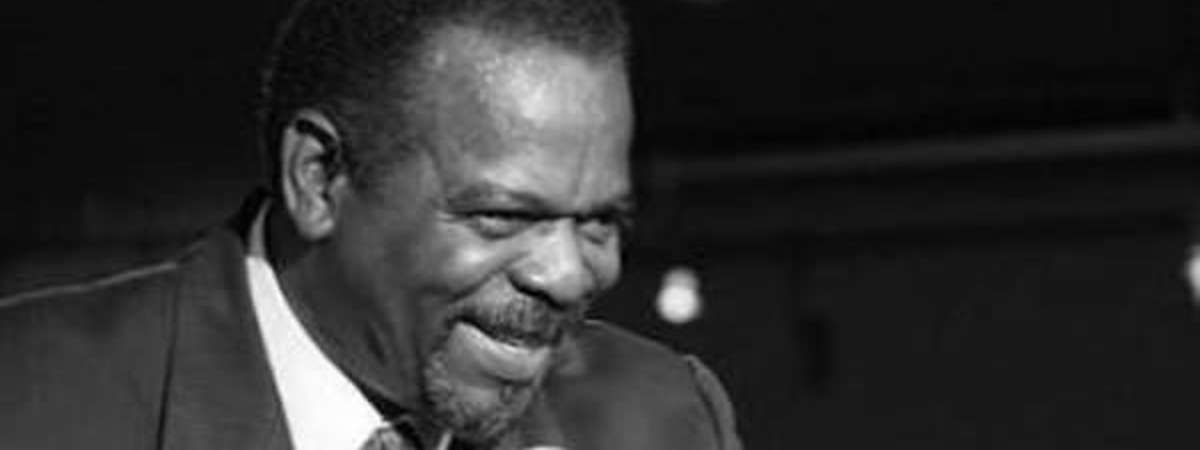
Nicolas Bearde Trio
Tickets

On sale smallslive.com
About
This artist does not have a bio yet.
Pianist Mike LeDonne was born in Bridgeport Connecticut in 1956. He was raised in his parent's music store and by the age of 10 his father, a jazz guitarist, began booking him on gigs. At age 21, Mike graduated from New England Conservatory and moved to New York City with the Widespread Jazz Orchestra.In 1981, he left Widespread to travel to the UK with Panama Francis and the Savoy Sultans. On returning, he began a two-year stint as the house pianist at Jimmy Ryan's, then one of New York' s oldest jazz clubs. It was there that he came under the influence of and played with many old masters such as Roy Eldridge, Papa Jo Jones and Vic Dickenson. He spent 1982-1983 with the Benny Goodman sextet and went on to play with Buddy Tate, Al Grey, Ruby Braff and many others. Later he worked with the Art Farmer-Clifford Jordan Quintet, went to Paris with Grady Tate, and played with James Moody, Dizzy Gillespie, Stanley Turrentine, Charles McPherson and Sonny Rollins. He also spent time as accompanist to singers Ernestine Anderson, Annie Ross and Etta Jones.In 1988 he started playing with the Milt Jackson Quartet (along with Mickey Roker and Bob Cranshaw). Mr. Jackson recorded Mike's compositions and arrangements. Mike also became the band's musical director. In the fall of 1992, Mike was chosen to be part of a group of top young musicians for the Phillip Morris Superband World Tour. Mike served as musical director for that group, which featured Ryan Kisor on trumpet, Joshua Redman on tenor saxophone, Jesse Davis on alto saxophone, Christian McBride on bass and Lewis Nash at the drums. Around this time, Mike toured with the Newport All-Stars in lineups that also featured Harry "Sweets" Edison and Clark Terry. Mike has been playing and recording with Benny Golson since 1997. He has also been leading trios which have included Ron Carter, Jimmy Cobb, Billy Hart, Pete LaRoca and Louis Hayes. Most recently, he has worked with Bobby Hutcherson. Mike has played concerts and clubs around the world since 1981.Along with his many recordings as a sideman, he has five CDs on Criss Cross Jazz and three on Double Time Records. The first two, 'Bout Time and The Feeling of Jazz are quintet projects with Tom Harrell, baritone saxophonist Gary Smulyan, bassist Dennis Irwin and drummer Kenny Washington. His third CD, Common Ground is a trio recording and also features Irwin and Washington. The fourth CD, Soulmates, includes Ryan Kisor, Joshua Redman, and Lewis Nash, with Peter Washington on bass and Jon Gordon on alto saxophone. 'Bout Time was one of the recordings selected as "Record Of The Year" in the 1989 Jazz Journal Critics Poll. The Feeling of Jazz was chosen as one of the "Top Ten Records of 1991 " in the Jazz Times' Critics Poll. Soulmates came in second in the "Best 12 Recordings of 1994" WBGO Poll (WBGO is the leading jazz radio station in the New York area). Waltz For An Urbanite features vibraphonist Steve Nelson and guitarist Peter Bernstein, along with Peter Washington and Kenny Washington. Waltz For An Urbanite won "Record Of The Month" in its first month of release on WBGO in Newark. Mike's sixth CD, To Each His Own, is on the Double Time label. It's a trio featuring Peter Washington and Mickey Roker on drums. This disc received four stars in a Downbeat review. Mike's seventh CD Then And Now, also on Doubletime, is a quintet recording featuring Eric Alexander on tenor sax, Jim Rotondi, trumpet, Peter Washington on bass, and Joe Farnsworth on drums. The latest CD Bags'Groove, is a tribute to Milt Jackson which features Steve Nelson on vibes, along with Jim Snidero on flute, Steve Wilson on alto flute, Jim Rotondi on flugelhorn, Steve Davis on trombone, and a rhythm section including Bob Cranshaw and Mickey Roker. This CD also received 4 stars in Downbeat magazine.Mike is the co-author of Jim Snidero's Jazz Conception for Piano and Piano Comping books, on Advance Music. In Sept. In 2002 Mike joined the faculty at the Juilliard School of Music. He has won praise not only from critics but from master musicians: Oscar Peterson picked him as one of his favorite pianists of today.weblinks:www.mikeledonne.com
For generations, the Midwest has been a fertile ground for producing talented jazz bass players. St. Louis native Jimmy Blanton revolutionized the role of the bass during his years with the Ellington band in the 1930s. Oklahoman Oscar Pettiford co-led the first bebop group (with Dizzy Gillespie) to play on New York City's famed 52nd St. And Ron Carter, born in Michigan, redefined the role of the bass in small group jazz during his tenure with the great Miles Davis Quintet of the 1960s.
And while Bebop Generations bass player John Webber would modestly assert that he doesn't belong in the same league with legends such as Blanton, Pettiford and Carter, he is a prime example of the continuing stream of jazz musicians from the Midwest who have migrated to the jazz scene in New York -- and who help keep it going strong as the center for jazz activity in the world.
"I was actually born in St. Louis," states Webber during a conversation from his New York City apartment. "But when I was three, my parents moved to Wheaton, just outside of Chicago. That's pretty much where I grew up and first got into music."
By the time he was 10, Webber was taking lessons on bass -- but like most beginning students on the instrument, he started out on the electric bass rather than the large bulky upright. But that didn't mean he wasn't listening to jazz acoustic bass players. In fact, two legendary jazz bassists -- Ray Brown and Paul Chambers were his primary inspirations.
"The sound that ray Brown could get out of the bass was just amazing to me," recalls Webber. "And he was so solid in his technique. And Paul Chambers had that great walking bass style, and was so great playing with Miles and Coltrane."
By the age of 15, Webber had switched to playing the upright bass. After graduating from high school, he began serving his musical apprenticeship on the Chicago jazz scene -- working his way up to performing with top local musicians such as sax players Von Freeman and Lin Halliday and pianist Jodie Christian.
"That was where I really learned how to play jazz professionally," states Webber. "There were a lot of fine musicians playing in Chicago, and it was a competitive scene, because at that time there weren't a whole ton of places to play. So you definitely had to be good to play with the top musicians."
By 1986, Webber decided it was time to make the move to the competitive New York City jazz scene. He had built a solid reputation as one of the top bass players in Chicago, and had built up some solid contacts through jobs backing touring musicians coming through Chicago.
"It worked out pretty well for me," he recalls. "I moved to New York at the end of '86, and within a few months I was working with musicians like Jimmy Scott, Lou Donaldson, Bill Hardman and Junior Cook. And I was also playing regularly with groups led by Peter Bernstein and Christopher Hollyday."
It turned out that Webber's connections with trumpeter Hardman and sax player Cook would have the most lasting impact on his career -- and the formation of Bebop Generations. Hardman, who was out of the harp bop tradition and had worked with Charles Mingus, Jackie McLean, Art Blakey and Horace Silver, hosted freewheeling jam sessions at his house every week. Webber was a regular participant, and it was at one of those jams that he met drummer Joe Farnsworth and sax player Eric Alexander.
"When Joe got the leader's job at Augie's on weekends," recalls Webber, "he started asking me to play with his groups, and cecil Payne was a regular too. Eric had gone back to Chicago for awhile, but when he came back to New York, he started playing there. So that was really the roots of Bebop Generations."
Although Webber has established himself as a regular bass player with Johnny Griffin's group and records with Horace Silver and other musicians, playing with Bebop Generations -- and musicians such as Payne and Alexander -- has a special appeal.
"Cecil always comes up with some surprises whenever you play with him, plus he often plays things humorously," says Webber. "And Eric works you hard. He definitely plays with a lot of intensity. It's definitely a great band, and I want to keep working with these guys for as long as possible."
Pianist Mike LeDonne was born in Bridgeport Connecticut in 1956. He was raised in his parent's music store and by the age of 10 his father, a jazz guitarist, began booking him on gigs. At age 21, Mike graduated from New England Conservatory and moved to New York City with the Widespread Jazz Orchestra.In 1981, he left Widespread to travel to the UK with Panama Francis and the Savoy Sultans. On returning, he began a two-year stint as the house pianist at Jimmy Ryan's, then one of New York' s oldest jazz clubs. It was there that he came under the influence of and played with many old masters such as Roy Eldridge, Papa Jo Jones and Vic Dickenson. He spent 1982-1983 with the Benny Goodman sextet and went on to play with Buddy Tate, Al Grey, Ruby Braff and many others. Later he worked with the Art Farmer-Clifford Jordan Quintet, went to Paris with Grady Tate, and played with James Moody, Dizzy Gillespie, Stanley Turrentine, Charles McPherson and Sonny Rollins. He also spent time as accompanist to singers Ernestine Anderson, Annie Ross and Etta Jones.In 1988 he started playing with the Milt Jackson Quartet (along with Mickey Roker and Bob Cranshaw). Mr. Jackson recorded Mike's compositions and arrangements. Mike also became the band's musical director. In the fall of 1992, Mike was chosen to be part of a group of top young musicians for the Phillip Morris Superband World Tour. Mike served as musical director for that group, which featured Ryan Kisor on trumpet, Joshua Redman on tenor saxophone, Jesse Davis on alto saxophone, Christian McBride on bass and Lewis Nash at the drums. Around this time, Mike toured with the Newport All-Stars in lineups that also featured Harry "Sweets" Edison and Clark Terry. Mike has been playing and recording with Benny Golson since 1997. He has also been leading trios which have included Ron Carter, Jimmy Cobb, Billy Hart, Pete LaRoca and Louis Hayes. Most recently, he has worked with Bobby Hutcherson. Mike has played concerts and clubs around the world since 1981.Along with his many recordings as a sideman, he has five CDs on Criss Cross Jazz and three on Double Time Records. The first two, 'Bout Time and The Feeling of Jazz are quintet projects with Tom Harrell, baritone saxophonist Gary Smulyan, bassist Dennis Irwin and drummer Kenny Washington. His third CD, Common Ground is a trio recording and also features Irwin and Washington. The fourth CD, Soulmates, includes Ryan Kisor, Joshua Redman, and Lewis Nash, with Peter Washington on bass and Jon Gordon on alto saxophone. 'Bout Time was one of the recordings selected as "Record Of The Year" in the 1989 Jazz Journal Critics Poll. The Feeling of Jazz was chosen as one of the "Top Ten Records of 1991 " in the Jazz Times' Critics Poll. Soulmates came in second in the "Best 12 Recordings of 1994" WBGO Poll (WBGO is the leading jazz radio station in the New York area). Waltz For An Urbanite features vibraphonist Steve Nelson and guitarist Peter Bernstein, along with Peter Washington and Kenny Washington. Waltz For An Urbanite won "Record Of The Month" in its first month of release on WBGO in Newark. Mike's sixth CD, To Each His Own, is on the Double Time label. It's a trio featuring Peter Washington and Mickey Roker on drums. This disc received four stars in a Downbeat review. Mike's seventh CD Then And Now, also on Doubletime, is a quintet recording featuring Eric Alexander on tenor sax, Jim Rotondi, trumpet, Peter Washington on bass, and Joe Farnsworth on drums. The latest CD Bags'Groove, is a tribute to Milt Jackson which features Steve Nelson on vibes, along with Jim Snidero on flute, Steve Wilson on alto flute, Jim Rotondi on flugelhorn, Steve Davis on trombone, and a rhythm section including Bob Cranshaw and Mickey Roker. This CD also received 4 stars in Downbeat magazine.Mike is the co-author of Jim Snidero's Jazz Conception for Piano and Piano Comping books, on Advance Music. In Sept. In 2002 Mike joined the faculty at the Juilliard School of Music. He has won praise not only from critics but from master musicians: Oscar Peterson picked him as one of his favorite pianists of today.weblinks:www.mikeledonne.com
For generations, the Midwest has been a fertile ground for producing talented jazz bass players. St. Louis native Jimmy Blanton revolutionized the role of the bass during his years with the Ellington band in the 1930s. Oklahoman Oscar Pettiford co-led the first bebop group (with Dizzy Gillespie) to play on New York City's famed 52nd St. And Ron Carter, born in Michigan, redefined the role of the bass in small group jazz during his tenure with the great Miles Davis Quintet of the 1960s.
And while Bebop Generations bass player John Webber would modestly assert that he doesn't belong in the same league with legends such as Blanton, Pettiford and Carter, he is a prime example of the continuing stream of jazz musicians from the Midwest who have migrated to the jazz scene in New York -- and who help keep it going strong as the center for jazz activity in the world.
"I was actually born in St. Louis," states Webber during a conversation from his New York City apartment. "But when I was three, my parents moved to Wheaton, just outside of Chicago. That's pretty much where I grew up and first got into music."
By the time he was 10, Webber was taking lessons on bass -- but like most beginning students on the instrument, he started out on the electric bass rather than the large bulky upright. But that didn't mean he wasn't listening to jazz acoustic bass players. In fact, two legendary jazz bassists -- Ray Brown and Paul Chambers were his primary inspirations.
"The sound that ray Brown could get out of the bass was just amazing to me," recalls Webber. "And he was so solid in his technique. And Paul Chambers had that great walking bass style, and was so great playing with Miles and Coltrane."
By the age of 15, Webber had switched to playing the upright bass. After graduating from high school, he began serving his musical apprenticeship on the Chicago jazz scene -- working his way up to performing with top local musicians such as sax players Von Freeman and Lin Halliday and pianist Jodie Christian.
"That was where I really learned how to play jazz professionally," states Webber. "There were a lot of fine musicians playing in Chicago, and it was a competitive scene, because at that time there weren't a whole ton of places to play. So you definitely had to be good to play with the top musicians."
By 1986, Webber decided it was time to make the move to the competitive New York City jazz scene. He had built a solid reputation as one of the top bass players in Chicago, and had built up some solid contacts through jobs backing touring musicians coming through Chicago.
"It worked out pretty well for me," he recalls. "I moved to New York at the end of '86, and within a few months I was working with musicians like Jimmy Scott, Lou Donaldson, Bill Hardman and Junior Cook. And I was also playing regularly with groups led by Peter Bernstein and Christopher Hollyday."
It turned out that Webber's connections with trumpeter Hardman and sax player Cook would have the most lasting impact on his career -- and the formation of Bebop Generations. Hardman, who was out of the harp bop tradition and had worked with Charles Mingus, Jackie McLean, Art Blakey and Horace Silver, hosted freewheeling jam sessions at his house every week. Webber was a regular participant, and it was at one of those jams that he met drummer Joe Farnsworth and sax player Eric Alexander.
"When Joe got the leader's job at Augie's on weekends," recalls Webber, "he started asking me to play with his groups, and cecil Payne was a regular too. Eric had gone back to Chicago for awhile, but when he came back to New York, he started playing there. So that was really the roots of Bebop Generations."
Although Webber has established himself as a regular bass player with Johnny Griffin's group and records with Horace Silver and other musicians, playing with Bebop Generations -- and musicians such as Payne and Alexander -- has a special appeal.
"Cecil always comes up with some surprises whenever you play with him, plus he often plays things humorously," says Webber. "And Eric works you hard. He definitely plays with a lot of intensity. It's definitely a great band, and I want to keep working with these guys for as long as possible."
Lineup